Pensacola MESS Hall
Why Failure in Making?
We were a very small team, with everyone engaging in our making programs. We had a core group of staff who have led the development of our programs, who have an aligned philosophy. While several other staff had been on our team for several years, helping them shift mentality to allowing failure and open exploration was a slow process. Other staff who were newer did not have as many opportunities for dedicated training.
It’s really been a wonderful learning opportunity in ways that I did not expect. So I find myself, I’m less afraid of failure and of making mistakes and more excited about learning how to do something different. (Educator, Year 3)
What is Failure
Failure is a word that is probably defined differently by different members of our team. Generally, we don’t use that word much. Rather, things “didn’t work as planned,” and we often get more engaged in the failures due to its learning potential. This was also reflected in the addition of a new rule to our camps, “It’s okay to fail.”
failure-based activity
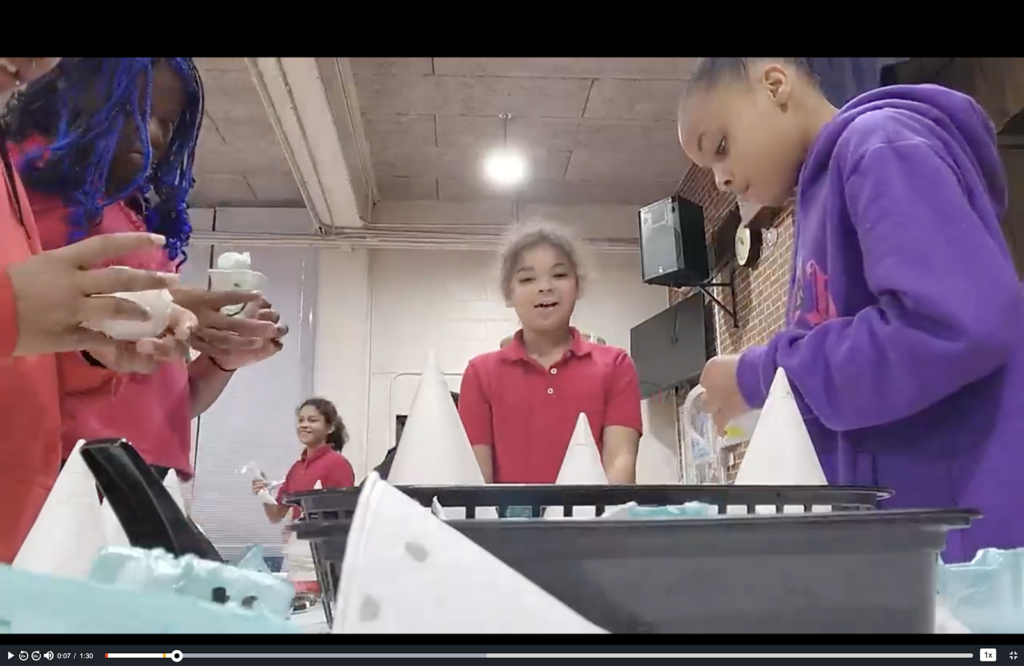
One of the activities was a wind tube challenge. Children were given lightweight materials—such as paper cups, tissue paper, coffee filters, pipe cleaners, feathers, or plastic bags—and invited to design objects that they can launch into the tube. The goal was to see how long their creation could float, whether it spinned or flipped, or hover at a certain height in the tube.
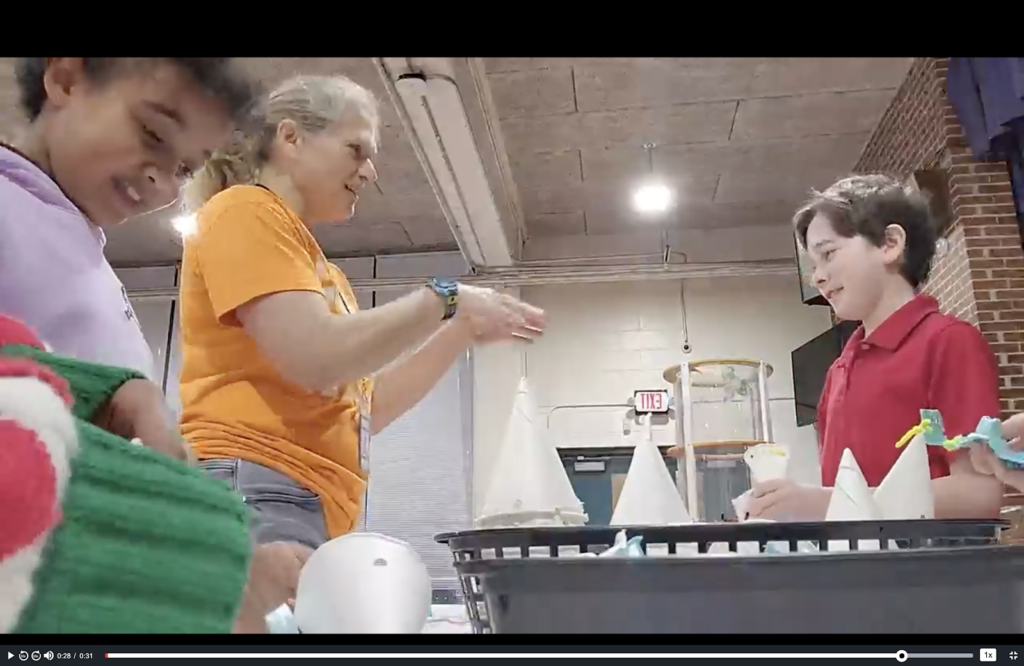
one failure moment or challenge
One challenge arose around staff’s fear of letting campers fail repeatedly. In a camp setting, where staff spend many hours each day with the same children, repeated failure can feel more emotionally charged—risking not only an unhappy camper but also an unhappy family member. This dynamic placed a heavy emotional and energetic burden on staff, who often responded with high levels of attention and early intervention to prevent failure from escalating. In practice, this meant stepping in quickly to keep campers successful, which served as a self-protection mechanism for staff. Overcoming this challenge involved recognizing this pattern, discussing it during professional development, and exploring ways to balance emotional safety with opportunities for productive struggle.
What did We learn?
Through this process, we learned to trust staff when they say that repeated failure is creating problems—especially when they are with the same group of kids for extended periods, as in camps. We also noticed that it can be easier for new staff to try something different, since everything is new for them anyway. One key takeaway was the value of building “Dealing with Failure” into regular staff meetings. These conversations helped normalize imperfection, reminded everyone that we were not going to be perfect during the summer, and created a space to share strategies. Another important lesson came from having staff (including myself) record and watch ourselves during making events. Personally, reviewing the videos gave me powerful insight into my own interactions—where I sometimes got impatient or stepped in too quickly—and helped me see moments where I could have given kids more space to fail and recover on their own.
one insight or practice We Continue
The idea that “It is ok to fail or mess up at the MESS Hall” has been added to all of our interactions with students. Since the FiM experience, the staff talk more about failures and are more open with others when we think we have failed at something. In addition, we have two staff that regularly interact with the same group of children during afterschool programs who have really learned from the FiM experience. These staff recognized that this group of children showed up to our programs afraid to fail and often would ask us to do the activity for them. We have supported these children through a process of understanding that failing when the MESS Hall is around is not just ok, but that it is part of the learning process. Now that we are entering the third school year with some of these students, we hear them telling new participants that it’s ok to not know and that it is ok to fail when the MESS Hall is around. For these children and for us as an organization, this is a big win.
About us
Our Mission
To inspire curiosity, experimentation, and creative problem solving through exploration of math, engineering, science, and stuff.
Our Vision
The Pensacola MESS Hall aspires to attract and create a community of critical and creative thinkers of all ages who are inspired by and understand the basic principles of science.
The Pensacola MESS Hall is a hands-on science museum that encourages visitors to “mess around”, to plan their own experiments to learn more about the natural world. We are a place where families can work together or explore side-by-side, having fun while learning. Whether you are looking for a family outing during school vacation, a more in-depth experience in our camps or homeschool programs, or even an adult night out at our adult program, prepare to be inspired to continue discovering even after you leave.