Science Museum Oklahoma
Why Failure in Making?
We got involved in this professional development because the topic of failure has always been of interest, and we had begun noticing that children seemed less willing to try new and unfamiliar things. We wanted to design programs that would intentionally help shift guests’ mindsets—from the fearful caution of The Croods to the playful resilience of Meet the Robinsons.
At the same time, we saw a need to build a shared, organization-wide vocabulary around failure. With multiple makerspaces, we wanted to create more consistency in how staff interacted with visitors, encouraged risk-taking, and celebrated moments of failure as learning opportunities. We also wanted these ideas to be embedded in our staff trainings so that failure could be normalized and embraced by our whole team. And honestly, part of the motivation was the opportunity to learn from peers—“stealing” good ideas and strategies from other museums to strengthen our own practice.
We’ve shared some of our tinkering activities with other museums as a result of the program. We also came to understand that some of our staff have more pedagogical insights than we first realized. (Lead Facilitator)
What is Failure
Failure at its core shows us how far we can push the envelope, but it is more than that, failure gives us the gift of learning something that we will remember. If you adapt, learn, grow, and try again, you have the chance to become much more than you were before.
failure-based activity
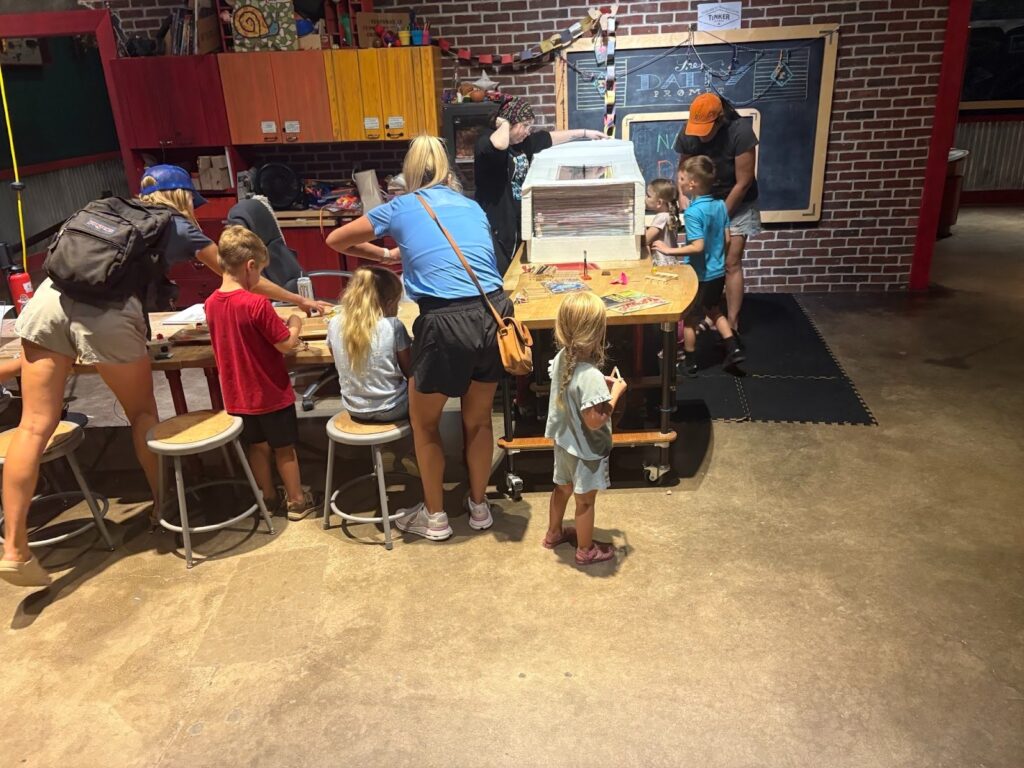
We decided to take it a step farther and implement a planned failure moment in all of our activities. We already had one (cardboard airplanes) with an obvious solution that did not work so we could delve into how important it is to understand all the variables and test over and over. But our other activities (primarily in our tinkering/maker spaces) benefited from a planned-for failure moments. Some examples are claymation stop motion videos where the important part of failure was learning to examine and redo if needed. Or book binding where the failure moment was more about perseverance through something hard like knots and lacing. Or with Ukuleles where trying and doing something badly is the first step toward doing something well.
What did We learn?
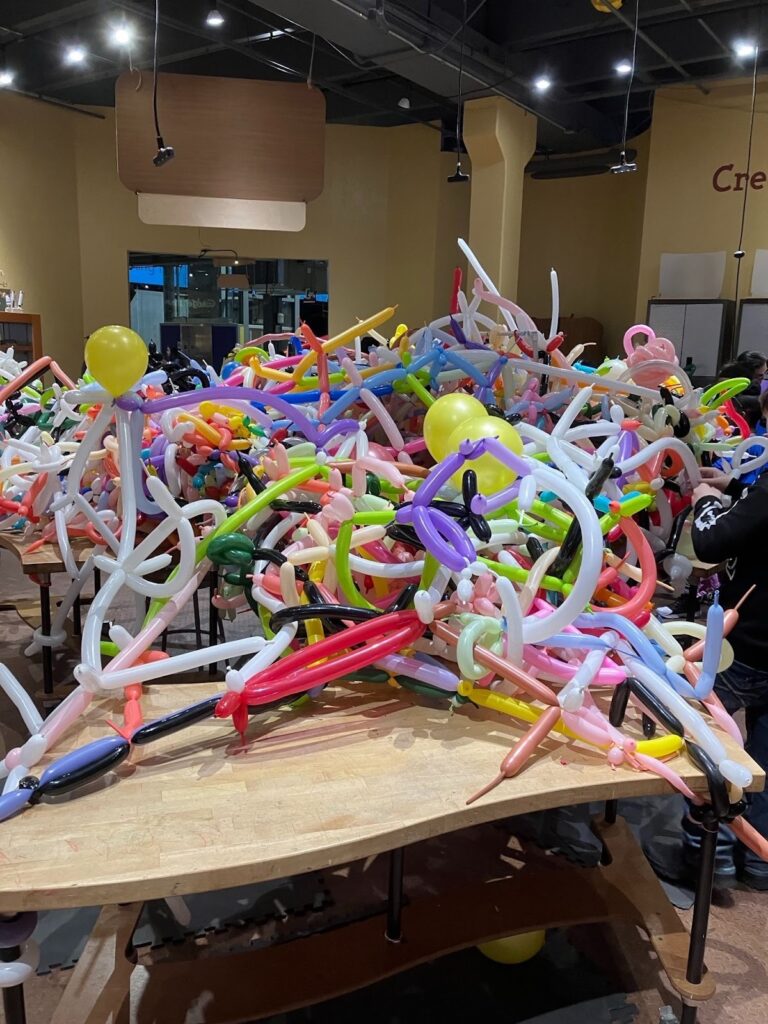
Through this process, we learned that fear of trying new things—among both staff and guests—can be transformed through intentional language and practice. We saw that vocabulary matters enormously, not only in how we talk with guests but also in how we talk with one another as staff. By shifting the way we framed failure, our own mindsets began to change.
one insight or practice We Continue
This insight led us to plan new activities differently: instead of simply designing what we think will be “cool,” we now design with failure in mind—anticipating where participants might struggle, deciding what materials or information to withhold to prompt problem-solving, and planning how staff will respond when failure occurs.
We also began prepping guests for failure from the start, asking questions like, “What will you do if this doesn’t work the first time?” This small change dramatically reduced frustration and made guests more willing to try again. Even very young children began using this vocabulary themselves, proudly telling parents that failure is part of the process and that no one gets it right the first time. Seeing guests adopt this language and celebrate their own retries has reinforced for us that embracing and normalizing failure can be contagious—and powerful.
About us
Science Museum Oklahoma elevates STEAM education through hands-on programs, school partnerships, and statewide outreach. From live demonstrations to mobile science labs, we make learning accessible and engaging. Through camps, teacher training, and community initiatives, we inspire curiosity and critical thinking for learners of all ages.
Our mission is to ignite curiosity and inspire learning by showcasing the vast impact of science in nearly every aspect of our world. From physics and space exploration to engineering, biology, and industry, our exhibits reflect the boundless nature of discovery. Whether through innovative programs, groundbreaking exhibits, or community outreach, we are dedicated to making science accessible, engaging, and unforgettable for all.