Sacramento Museum of Science and Curiosity
Why Failure in Making?
We were a young organization that was shifting toward a design challenge / engineering challenge based learning. As an engineer, I strongly believe in making (and failing) and wanted to create a strong foundation for our staff.
So I feel basically the impact was like we saw ourselves and how we felt about failure, and we don’t want these generations to feel that same way. And so we want to model that failure is okay, and that failure is kind of just one way of learning, and it’s okay to fail. (Educator, Year 3)
What is Failure
At the start, we treated failure as an essential part of learning — a signal to pause, reflect, and ask, “What can be modified to make this better?” Failure was framed as a natural and necessary step in the process of improvement. Through this process, our view of failure deepened. We came to see failure as what happens when curiosity takes shape — the moment that propels learners into deeper exploration and growth. Failure is no longer just a problem to solve, but part of an ongoing journey toward discovery and mastery.
failure-based activity
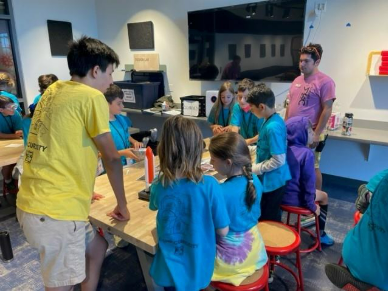
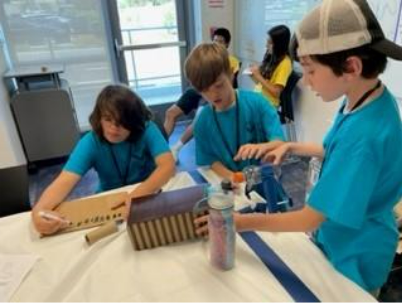
We focused on three different summer camp activities. One, learners created a bridge that only touched foam blocks and could bear the weight of a toy car in the center. Two, learners designed and built a catapult prototype, then improved it and made a final product. Three, learners built a tool to catch a penny with the least amount of noise.
one failure moment or challenge
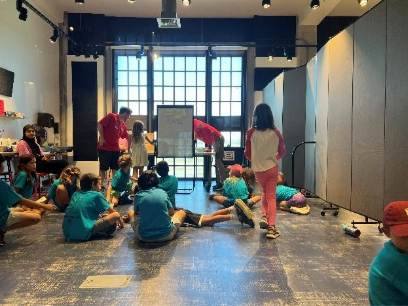
For the penny catching activity we decided to use a decibel measuring app on an iPad. After the first run-through of the activity, we quickly realized that it was going to be difficult to capture just the noise of the penny with all the other noise in the classroom. After brainstorming with staff, we changed the order of the activity so that campers tested their designs one at a time. This limited the noise and allowed for better results.
What did We learn?
Through this process, we saw how powerful it can be to intentionally center failure as part of our practice. Our team experienced a new level of energy and engagement, sparking fruitful conversations about how failure shows up both on the floor and within programs. We began actively rebuilding and reshaping our school programs with new themes and activities, and this process gave both our core participants and seasonal camp staff the confidence to experiment and adapt in real time.
“Failure” became a shared language — not just an abstract concept, but a regular topic of conversation. This helped us build a culture of debriefing, where immediate reflection and later, structured conversations allowed staff to learn from both challenges and successes. Camp staff became more adaptable and eager to make iterative changes based on what they were observing.
We also began integrating failure stories and reflective discussions into our daily morning huddles, creating a safe space for the team to share experiences, dig into stories from peers, and support one another’s growth. This shift has strengthened our collaborative culture and made reflection and adaptation part of our daily practice.
one insight or practice We Continue
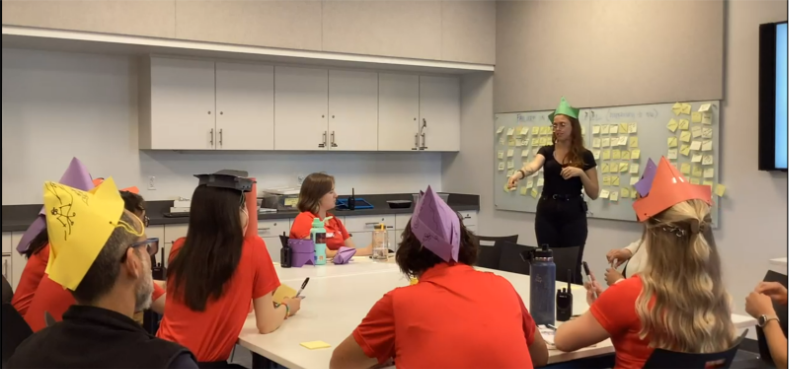
Our team really embraced the concept of “unstuck” poster. The posters really allow staff to collaborate with students and campers to work through failure. We now have them in our maker space as well as on the wall in the classrooms during summer camp. Another practice that our staff has carried forward from this experience is the language used when talking about failure has changed, allowing for more empathetic and understanding interactions with their fellows as well as guests visiting the museum.
Adult Focused Study
Initial Questions and Interests
Kids spend most of their time with their caregivers and teachers. Therefore, the interactions with those people is critical for shaping and influencing on their relations with failure. Our western society shifted way too far to be protective and avoiding any chance to fail. We wanted to explore together how we could help shift the needle to introduce failure and “train” parents to accept it for the benefit of learning and developing.
What Was your Research Focus?
This study aimed to explore how caregiver involvement and guided prompts impact a child’s experience with failure while engaging in the engineering design process. Specifically, it tested whether providing caregivers with resources fosters a more positive relationship with failure and enhances engagement in an engineering challenge. In the control group, caregivers and children were informed they could build together without a time limit. Observational data was collected without interference. In the experimental group, we added an explanation and a pamphlet for caregivers emphasizing the importance of failure in childhood development with a few methods that they could use to support their child.
What did your research highlight?
Approximately 40 data points were collected, focusing on factors such as time spent at the activity and the number of iterations (defined as a new building attempt or rebuilding after a collapse).
First, the results highlighted that caregivers provided with resources foster greater engagement and resilience in children.
Time Spent:
- Control Group: Median time 7 minutes
- Experimental Group: Median time 10 minutes
Number of Iterations:
- Control Group: 5.5 iterations (median count)
- Experimental Group: 7.5 iterations (median count)
Second providing caregivers with a supportive framework and prompts enabled them to persist in encouraging their child, even when faced with resistance or apathy.
- Control Group: Median time 3.5 minutes
- Experimental Group: Median time 14 minutes
Few caregivers actively used the pamphlet provided. However, the introduction often sparked meaningful conversations about failure and problem-solving, indirectly achieving the study’s objectives.
What are the key takeaways of your research for the field?
The study demonstrated that providing caregivers with guidance and emphasizing the importance of failure significantly enhances children’s engagement with engineering challenges. Notably, the experimental group exhibited higher resilience and persistence, particularly in scenarios where caregiver-child dynamics were initially challenging. These findings underline the potential for educational exhibits to incorporate structured caregiver prompts and resources to maximize their impact on learning and skill development. Further research could focus on refining the caregiver prompts and assessing their long-term effects on problem-solving skills and attitudes toward failure.
About us
MOSAC’s mission is to serve as a dynamic regional hub that engages and inspires people of all ages to explore the wonders, possibilities, and responsibilities of science.
One of our major directives is to bring K-12 schools, colleges, universities, libraries, museums, and other community resources together to remove barriers and build a Science, Technology, Engineering, Arts and Math (STEAM) learning ecosystem that broadens and enriches each learner’s personal journey, with the ultimate goal of inspiring more students to enter STEAM careers.