
Children’s Science Center
Why Failure in Making?
The Children’s Science Center Lab was interested in this opportunity because we wanted to explore ways to support both our students and educators when they face failure during hands-on STEM activities.
In our organization as a whole, we have continued to look into other ways to encourage a growth mindset and acceptance of failure as a part of the workplace. We are interested to see how the industry at large addresses failure and find ways within our organization to improve our processes by embracing failure, taking risks, and trying new things. This mindset has allowed us to have more vocabulary and tools to accomplish organizational goals. (Lead Facilitator)
What is Failure
There were many definitions of failure that the team discussed. Some common themes in the discussion of failure was the inability to reach a desired outcome which can lead to feelings of frustration and disappointment. Often the word “expectations” came up. The misalignment of what you were expecting and the outcome that you are observing.
failure-based activity
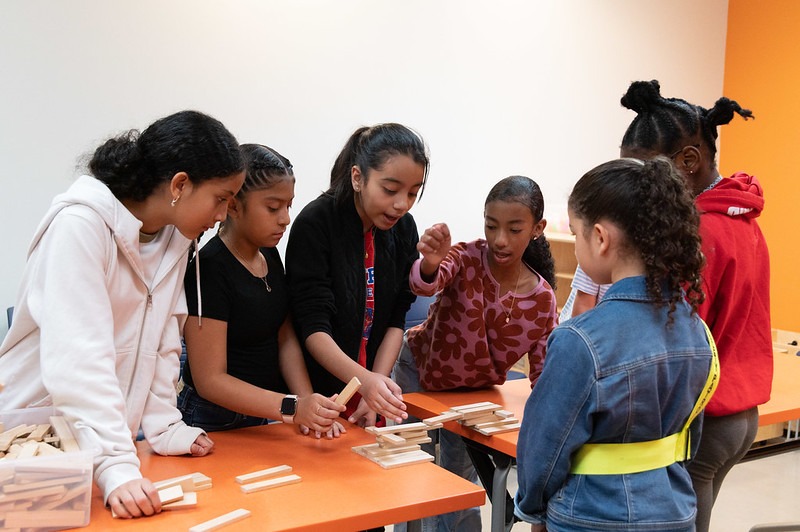
The activities that we saw failure the most in was our open ended building challenge with KEVA planks to build towers and bridges and our flying hovercraft activity. These are both activities that are facilitated for our school groups that visit us for Field Trips. One of the biggest challenges with these activities is that they are completed in about 22 minutes, so there is a balance of seeing something fail and then addressing it and making changes. With our bridge and towers activity we have a printed version with skills that can be used to get unstuck when failure happens. For both activities educators mention that failure is a way to learn new information about what works and what doesn’t work and that is reflected in real experiences and challenges that engineers face.
One Failure Moment or Challenge
One moment of failure was testing out the use of filming and educator self-reflection using a structured rubric. The structured rubric was not exactly the right fit to help educators to reflect on their strengths and areas of growth and there were challenges in recording the educators in our space due to noise. If we try this again, we would most likely facilitate an open ended discussion with targeted reflection questions.
Another failure moment was the use of two open ended reflection questions that educators were asked to respond to after every field trip. With feedback from educators, we reduced it to one open ended question “How did you respond to failure?” and a prompt to rank behaviors that students used to overcome failure or become unstuck from a scale of no, once or twice, a few times, many times, or all the time.
What did We learn?
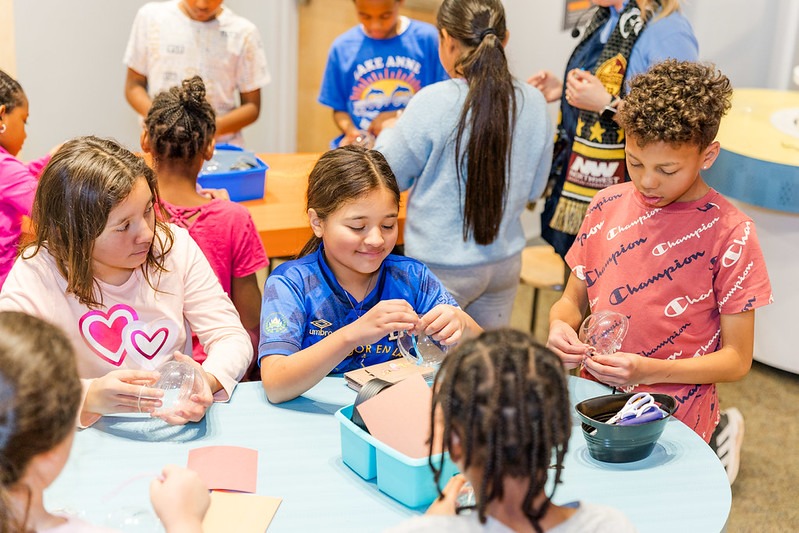
Through this process, we learned the importance of making failure visible and normal for both staff and students. One key outcome was the use of the Unstuck Poster as a shared resource during camps and field trips, helping kids reflect and try again when they felt stuck. This work shifted programming to intentionally include moments of productive struggle and equipped staff with strategies to guide children through frustration rather than preventing failure altogether. As a result, staff became more comfortable with their own mistakes, and students began to see failure not as a barrier but as a natural and valuable part of the learning process.
one insight or practice We Continue
We have continued to discuss failure at educator trainings for our various programs such as camps, off-site programming, and field trips. We have also continued to experiment ways to evaluate and reflect on our responses to failure and where we can improve or where educators need more support. Now that we have a foundation, we are looking at ways to address failure in areas where failure is not a part of the process like our chemistry based experience area and how to manage the responses to failure of the adults that are accompanying children.
About us
Our Mission: Is to inspire a love of learning STEM by providing unique opportunities to explore and create.
Our Vision: Is to create a world-class interactive science center that ignites the curiosity in all of us.
The Northern Virginia Science Center Foundation is a 501(c)3 non-profit organization that operates the Children’s Science Center Lab at Fair Oaks Mall and is building a world-class interactive science center in Dulles, VA. Our mission today allows us to serve tens of thousands of guests each year at the Lab and through our community programs delivered to schools, libraries, and STEM festivals across Northern Virginia. The Children’s Science Center Lab is an interactive museum where children, families, and school groups can explore science, technology, engineering and math (STEM) concepts through fun, engaging, hands-on exhibits, activities, and programs.