Telus World of Science Edmonton (Twose)
Why Failure in Making?
The reason we reached out was because the project closely aligned with what we would also like to do next in our space. We have a wonderful space and tools, but we needed the opportunities to reflect on our goals, our programs and how we train. From that reflection, we wanted to further understand how our audience was using the skills we teach them, and how we could be better at facilitating that process.
We would like to eventually become leaders in the discussion on the pedagogy around design-thinking and the importance of using makerspaces to increase self-efficacy and self-confidence in our audience.
Our participation has changed how we nurture instructor growth and how we treat the word “failure.” It opened a dialogue of permission to fail and try new things. We’re also considering expanding to formal teacher PD, in particular in the context of teaching coding. (Lead Facilitator)
What is Failure
Failure is redefined as just an essential and necessary step in the design-thinking process in order for the solution to have taken all possible factors and outcomes into consideration. With our younger audience, we shorten that to failure isn’t bad, failure is just a necessary step to making something better.
The definition of failure is less important than the actions taken around failure. Exactly defining failure leads us to thinking we can then overcome it – achieve a failure-less state where we can avoid or perfect these things in our definition. However, the point is not to try and achieve some mark of perfection or guard against all failures, the point is to embrace the failures we experience and while reflection and growth is a part of this, the other aspect is to acknowledge failures as a part of our humanness and embrace them. Failure is a series of actions and how we relate to those failures speaks to our sense of self.
failure-based activity
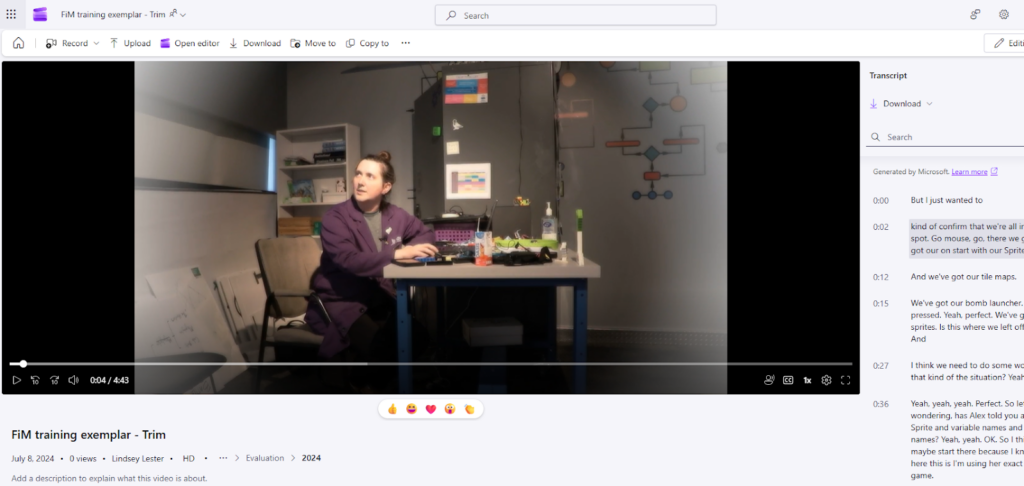
Our camp instructors went through training with our instructor Lindsey to understand the importance of failure in making as part of their training. This was based on the workshops provided on the FiM website. Lindsey demonstrated the process by showing a video of herself instructing a class, then walked through it with the camp instructors. (see below for a still of Lindsey’s video) The instructors then undertook a maker-based activity with their campers, with Lindsey observing and taking notes guided by the FiM process.
One Failure Moment or Challenge
One failure moment came when we reached the final workshops and realized that goal-setting activities didn’t make sense for our temporary staff, since they would not be with us long enough to work toward long-term goals. We adapted by encouraging individual reflection instead and began thinking about how to integrate goal-setting into our ongoing work with permanent staff. This experience helped us reimagine how goal-setting could become part of our long-term professional development approach for the whole team.
While goal-setting on a professional level as camp instructors was not applicable, it was interesting to note that many of the instructors (many who were partway through a Bachelor of Education degree) were able to set professional goals for themselves as future teachers and how they wanted to relate to students in their practicums and future teaching experiences.
What did We learn?
Through this process, we learned just how valuable mentorship and structured reflection can be for camp instructors. The observation and feedback cycle helped catch issues early—such as challenges with coding, setting boundaries, and supporting junior instructors—before they became larger problems. Instructors reported that the weekly reflection meetings were one of the most helpful aspects of the process, as they provided a safe space to share successes, discuss failures, and engage in peer-to-peer problem solving. These sessions surfaced concerns that were not otherwise shared with supervisors, including sensitive issues like body-shaming, and gave staff practical strategies they could immediately apply.
Instructors also shared that the process made them more conscious of their language, encouraged them to frame failure more positively, and improved their classroom management skills. The meetings built community, normalized challenges, and helped staff feel supported rather than isolated. While this frequency of reflection would be difficult to sustain outside of camp, it was well-suited for the fast pace of the camp environment and led to noticeable improvements in how instructors facilitated activities week to week.
one insight or practice We Continue
We are moving forward with the FiM model in training and supporting our instructors for school programs as well as camps. We’ve trained our team in the model and have paired them to engage in peer-to-peer observation and reflection. It’s a strong model that allows for deep reflection.
About us
TELUS World of Science – Edmonton’s Vision: We are the trusted hub of science engagement for all, pushing boundaries and igniting curiosity.
TELUS World of Science – Edmonton’s Mission: We are a catalyst for lifelong learning, creating a community of curious minds through immersive experiences and connections with the wonders of science.