The Tech Interactive
Why Failure in Making?
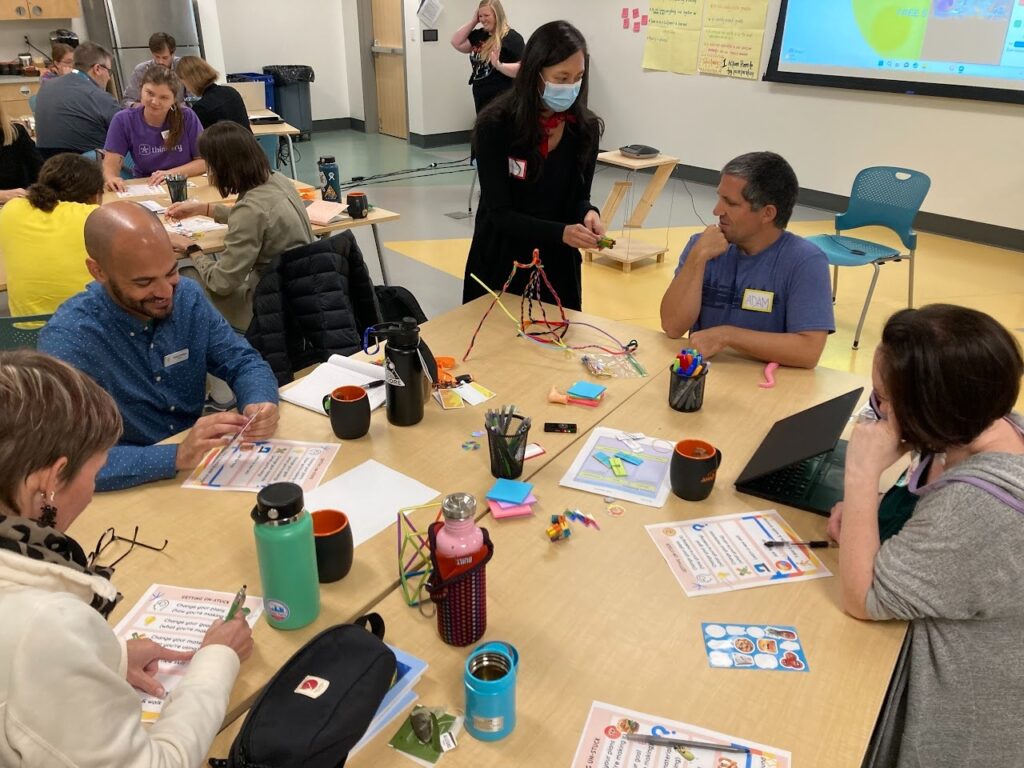
We were interested in taking part in this study as supporting students through failure is inherent in many things that we do at The Tech. We wanted to give educators the chance to discuss together their interpretations of failure and how it made them feel, so that they could be more empathetic with the learner, and help support them through those challenges, rather than ‘jumping in and fixing everything’ for them. We also wanted to collaborate with other organizations to see what they were doing in these areas, and whether there were other approaches we could implement.
I think that it made us more cognizant of each other’s facilitation styles and what we bring to the table. … I feel like I learn a lot from my team members and my team members can also absorb what I bring to the table. I think that it was a great process to get us all on the same page and thinking about how we can really make this a really good experience for different guests and different types of learners. (Year 1 Educator)
What is Failure
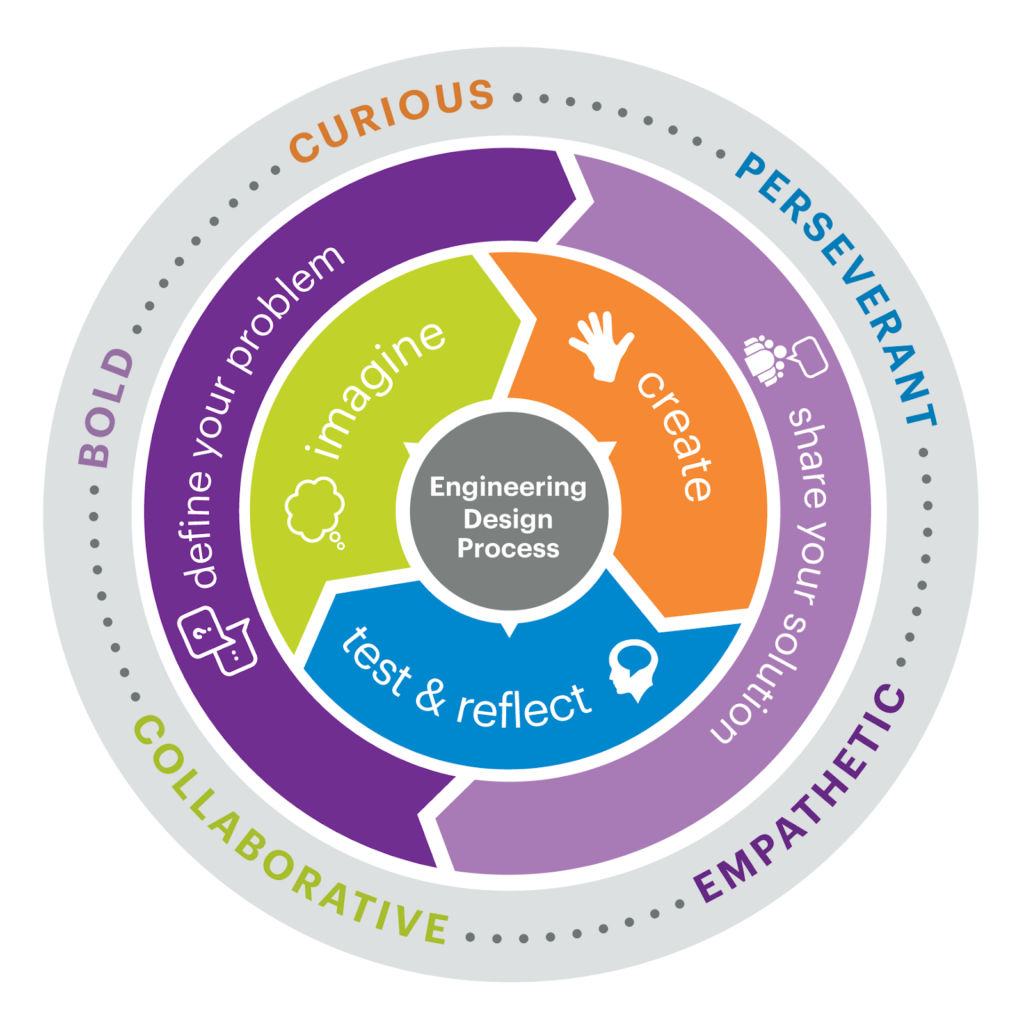
Failure is embedded in our Design Challenge Learning framework. Our design challenges use real-world problems so that learners are invested in the outcome. The process is iterative, which means learners can face constant failure, and they learn that this is ok, it is part of the design process, and working to overcome it is where growth happens. It’s also collaborative, which is key to future success, with people working together to overcome obstacles and come up with solutions.
failure-based activity
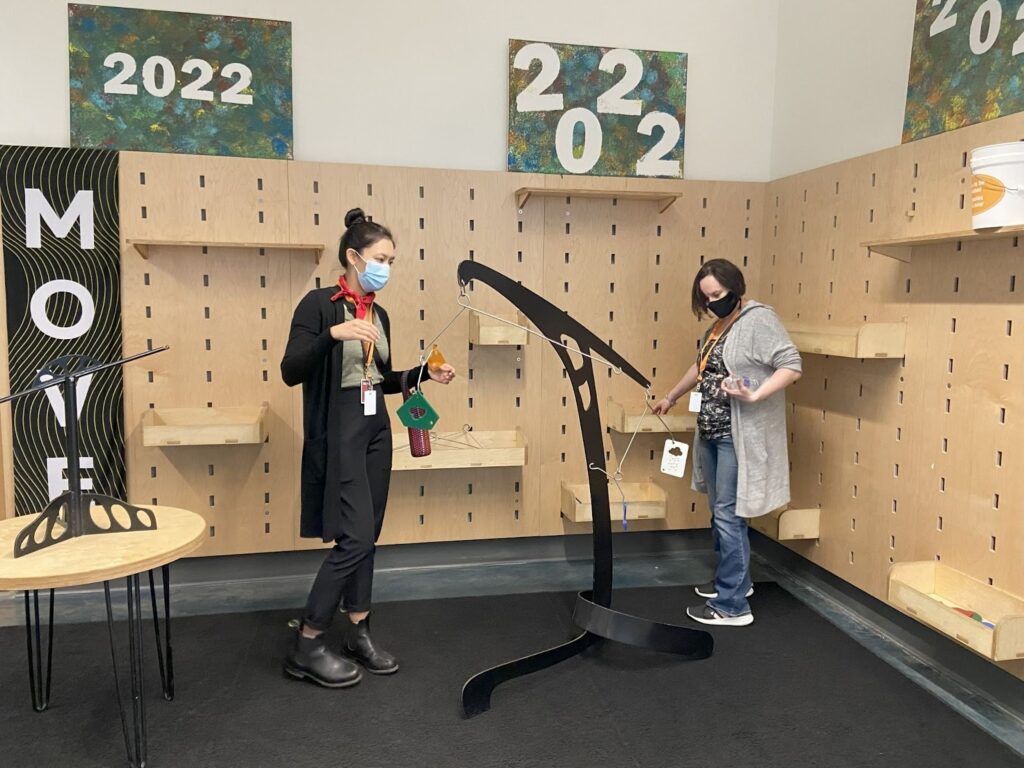
In year one, the engineering challenge was to use a variety of building materials to create devices that would launch a ball up one of the platforms on a testing “rig” (shown in figure below). The activity was designed to encourage open-ended exploration and iteration. Failure moments in this activity occurred when the prototype did not launch a ball to a certain point on a wall.
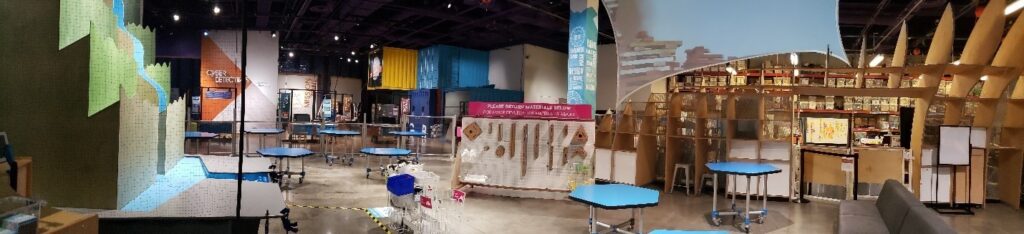
In year two, we focused on failure-based activities in two of our hands-on science labs – Physics of Roller Coasters and Engineering for Earthquakes. In the first activity, learners discovered the science and engineering behind thrill rides as they explored kinetic and potential energy, friction and the engineering process by designing and prototyping their own roller coasters. In the second activity, learners constructed seismically sound structures to survive “The Big One.” Learners worked as teams to practice the structural design and the engineering design process as they learned about one of California’s greatest natural threats: earthquakes.
one failure moment or challenge
In year 1, because The Tech had just reopened and we had minimal staff, we struggled to find a time for our educators to watch and select their video clips – especially as there was so much footage to go through. As a result, this part of the process fell to our lead facilitators, who selected approximately 5-7 clips per educator that demonstrated how they helped a student through a failure moment. From this each educator then selected one effective clip and one ineffective clip to share to the group.
What did We learn?
Being part of this process, we gained insights as to how to make reflection and growth an ongoing, supported experience, not only for our new staff, but also following up with semi-annual reviews where existing staff can observe, get feedback, and reflect. Second, we learned that giving educators more frequent chances to talk through challenges and wins – even daily for some of our educators – may help normalize growth and failure as part of the work. Third, we realized that reflection on failure needs to extend beyond just educators – volunteers, infusers, and anyone who interacts with guests could benefit. Lastly, we learned that the process works best when there’s not too much time between the different parts of the professional development process, and when success isn’t measured solely by whether the activity ‘works’.
one insight or practice We Continue
Although we always had the embracing of failure as part of our approach with guests, especially with students, and had it written into our lesson plans and activities, as a result of this experience we started to call it out more directly with our educators, and have regular and open discussions about it. It is now included in our annual training, and staff are given the opportunity to come together in smaller groups to reflect on their experiences with failure, and be able to discuss examples and approaches with their peers.
About us
The Tech Interactive is a family-friendly science and technology center. Our hands-on activities, experimental labs and design challenge experiences empower people to innovate with creativity, curiosity and compassion. The Tech is a world leader in the creation of immersive STEAM education resources to develop the next generation of problem-solvers locally, nationally and globally. We believe that everyone is born an innovator who can change the world for the better. We are driven by our mission to inspire the innovator in everyone.