ECHO
Why Failure in Making?
Embracing failure is a core part of our educational philosophy, but we were still developing our ability to transform philosophy into best practice. We were particularly interested in how to involve our large group of volunteers and interns in developing strong facilitation skills around guiding learners through failure.
The entire education team (including outreach educators) is more comfortable in discussing failure and growth. Our team has changed the way we engage summer interns, so they are more integrated with the team. They were the primary educators in our summer PD and reflection series. The experience was so impactful that we’ve begun to identify projects and PD for interns to use every summer. (Lead Facilitator)
What is Failure
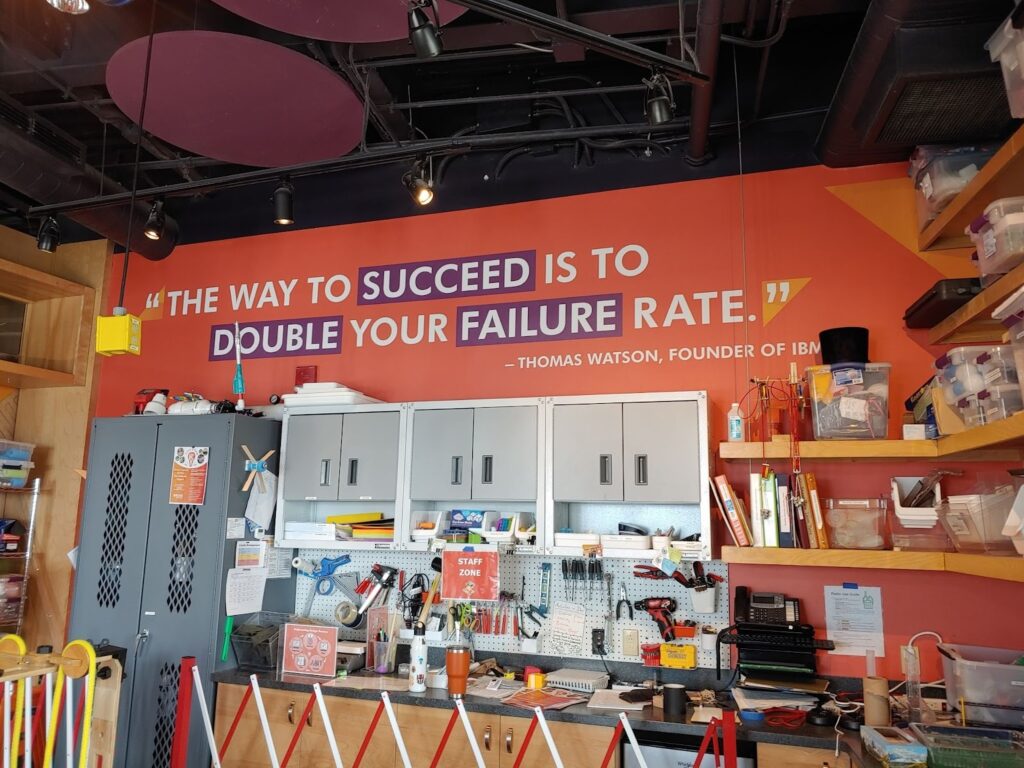
From the outset, we treated failure as an essential part of the Engineering Design Process — a tool for gathering information and improving prototypes. Our Engineer It space even displays the quote, “The way to succeed is to double your failure rate,” reminding visitors and staff that failure is a natural and necessary step toward innovation. Through this process, we realized there isn’t a single definition of failure that fits all of ECHO’s contexts. Instead, we developed a shared understanding that failure is a turning point — a moment that can either motivate or discourage, depending on how it’s experienced. We affirmed that failure is necessary for learning, helps build emotional resiliency, and is deeply personal — experienced differently by children, adults, and staff. We also began to see failure as a subversion of expectations, intimidating yet surmountable. Embracing that fear became part of our growth, helping us and our visitors lean into failure as a meaningful, empowering part of learning.
failure-based activity
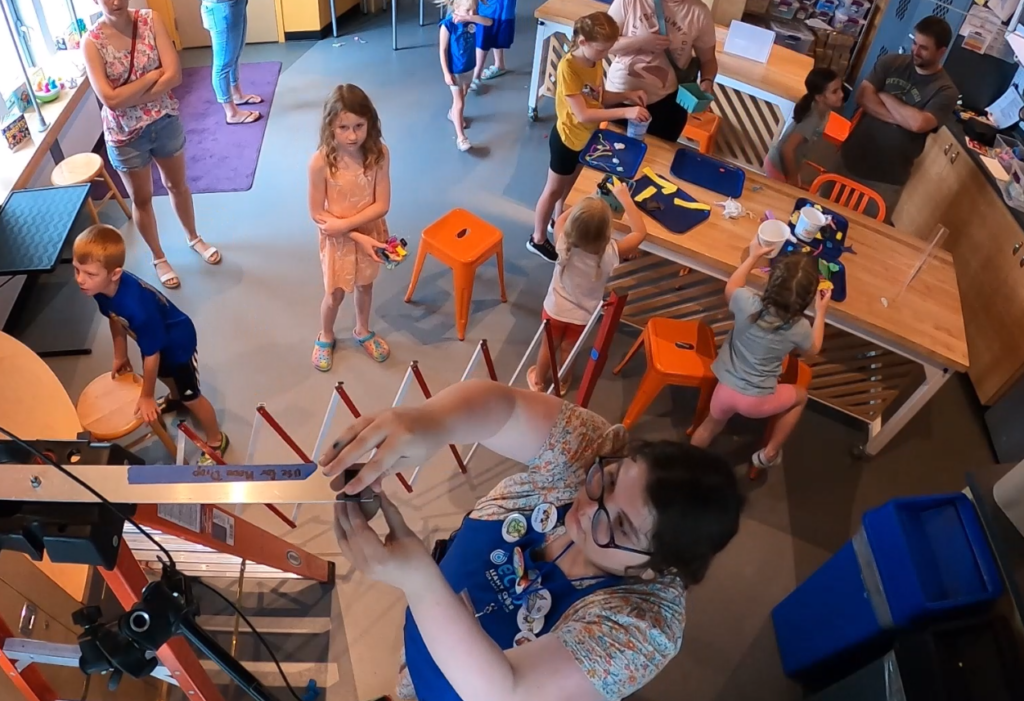
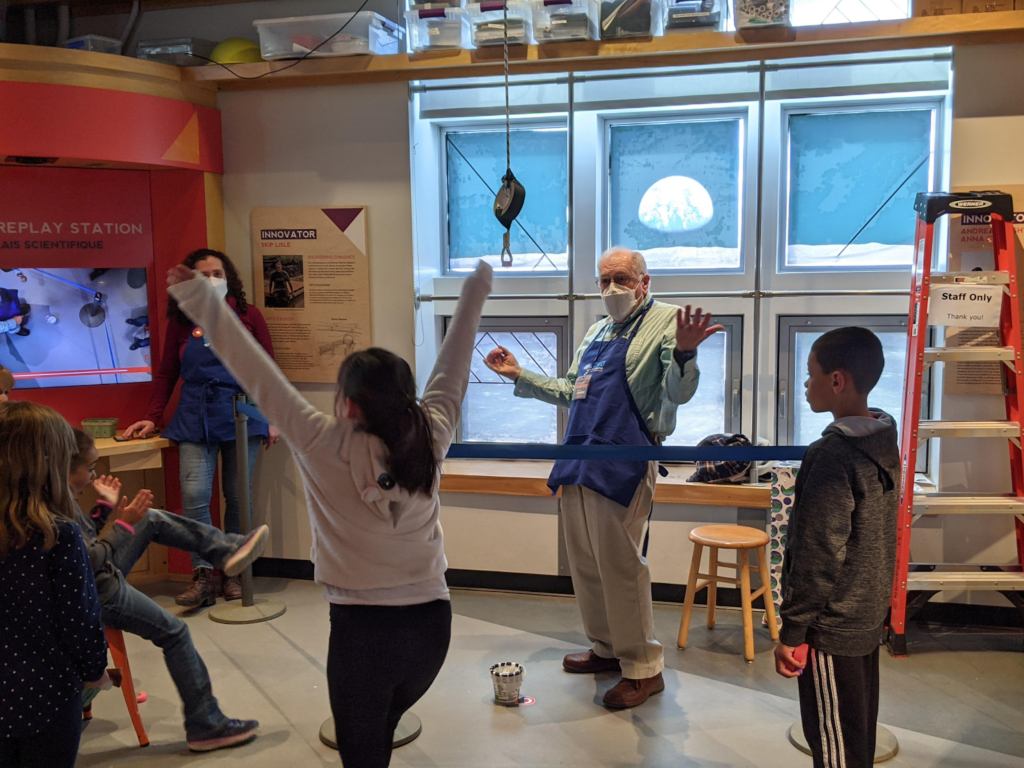
For this professional development experience, we focused on the Moon Drop, a reverse egg drop challenge. In this activity, guests design and build a basket to safely catch a wooden “egg” that is dropped from a magnet. If the egg lands too hard, it splits apart, so participants must experiment with design features like cushioning and stability. One common challenge was managing “bounce,” where the egg hits the basket but bounces out and breaks. This activity created multiple points of potential failure — both for participants as they test and iterate on their designs, and for staff as they guide the process and manage the timing of drops — making it a rich setting for exploring how failure can drive learning.
What did We learn?
We learned to consider where fail points are built into activities. This became part of our design conversations—identifying where we wanted visitors to encounter productive struggle and where we did not want them to fail to avoid frustration. In general, failure became something we talked about a lot more. We also learned to emphasize reflection and growth by integrating them into both activity design and professional development, using tools such as video for reflection and feedback to support staff learning and iterative improvement.
one insight or practice We Continue
Failure is a highly personal and subjective experience. Everyone has a different method of working through it. We’ve begun highlighting strategies that participants can use during their activity–including the installation of a “Getting Unstuck” chart. This has been a point of conversation for adult audiences, and a tool of empowerment for younger participants. It has allowed staff another tool for connecting guests with the Engineering Design Process.
About us
ECHO, Leahy Center for Lake Champlain is a 501(c) non-profit organization. ECHO’s mission is to inspire and engage families in the joy of scientific discovery, wonder of nature, and care of Lake Champlain.