MOXI: The Wolf Museum of Exploration + Innovation
Why Failure in Making?
In fall 2022, we introduced new learning objectives, including one focused on “embracing challenges.” The goal was to engage visitors in experiences that encourage them to exercise a growth mindset, persist through frustration, and use failure as an essential part of the learning process. We were excited to use the Failure in Making program as an opportunity for staff professional development, giving them a deeper understanding of, and direct experience with, one of our more difficult-to-evaluate learning objectives.
I think for me, just using the word failure, that it comes off as a bad word, and I think that we really just need to use it more… for everyone to really get used to it and to be a word that’s just more common in an everyday language. And so it’s not a bad word. I think the word just has such a negative connotation around it and that it also makes it so that we’re sort of scared of saying it to each other – and we shouldn’t be. (Educator, Year 3)
What is Failure
Before this opportunity, we already viewed failure as an essential and expected part of the learning process. Our programs are intentionally open-ended, designed to incorporate iteration and optimization, with an emphasis on process over product. Failure was not the end point but a step forward.
Through the professional development, we expanded our perspective of failure as a “fork in the road.” When something doesn’t go as planned or expectations are not met, learners can either move toward frustration, giving up, and internalizing the experience as being “a failure,” or they can use the moment as a catalyst for innovation, creativity, and deeper learning. Supporting learners through this moment means helping them build not just technical skills, but also emotional resiliency. equipping them to persist, reflect, and continue exploring.
failure-based activity
Our failure-based activity was a wind column exhibit – can you build something that hovers?
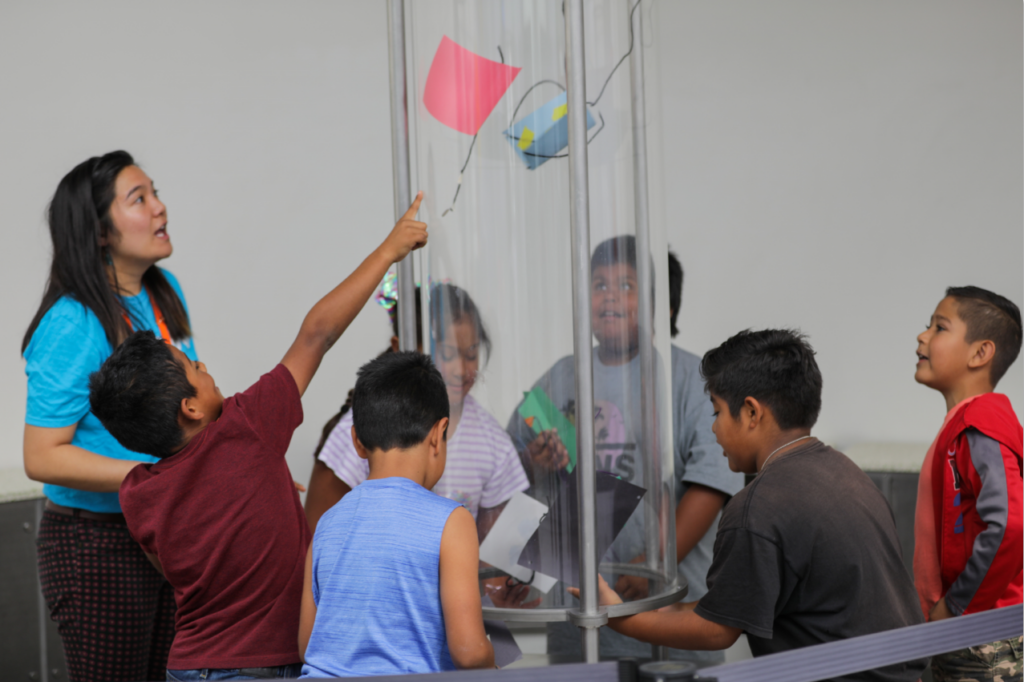
one failure moment or challenge
One “failure moment” arose during the video selection process, when staff struggled with how to identify a “failure-worthy” moment to analyze. The guidance provided was too general, leaving participants unsure about what counted as a meaningful moment for discussion. This lack of specificity created confusion and highlighted the need for clearer direction and firmer “edges and boundaries” in the process.
We also found that while many of our programs are designed to be open-ended, they were also a bit too open-ended, meaning that visitors found success even when they didn’t meet the intended goal. Our team reflected on what it means to design programs that encourage failure as a stepping stone, rather than simply offering open-ended exploration where success is guaranteed because the goal is exploration itself. We discussed when each approach is appropriate and how to intentionally build goal-oriented programming that remains non-prescriptive and flexible.
What did We learn?
Participating in this process highlighted the importance of establishing trust, vulnerability, and shared experiences among our team. As a relatively new group of staff, having a common project to reference with shared language created a sense of cohesion and bonding. Staff used humor to acknowledge small failures and to move past setbacks with more humility and grace than before. This shared experience helped foster a reflective practice, creating a safe space for vulnerability, trust, and open conversation about what worked, what didn’t, and why.
We also gained insights into age-appropriate failure moments for children. For example, younger children were primarily motivated by experimentation rather than achieving a specific outcome. Their challenge was often developmental – like tearing tape – rather than the success or failure of the final product. Recognizing these nuances helped facilitators adaptively identify meaningful points of struggle for each child, supporting growth at the right level while avoiding unnecessary frustration.
Overall, this process underscored the value of shared language around failure, reflective practice among staff, and thoughtful consideration of how to design experiences that support both learning and personal growth.
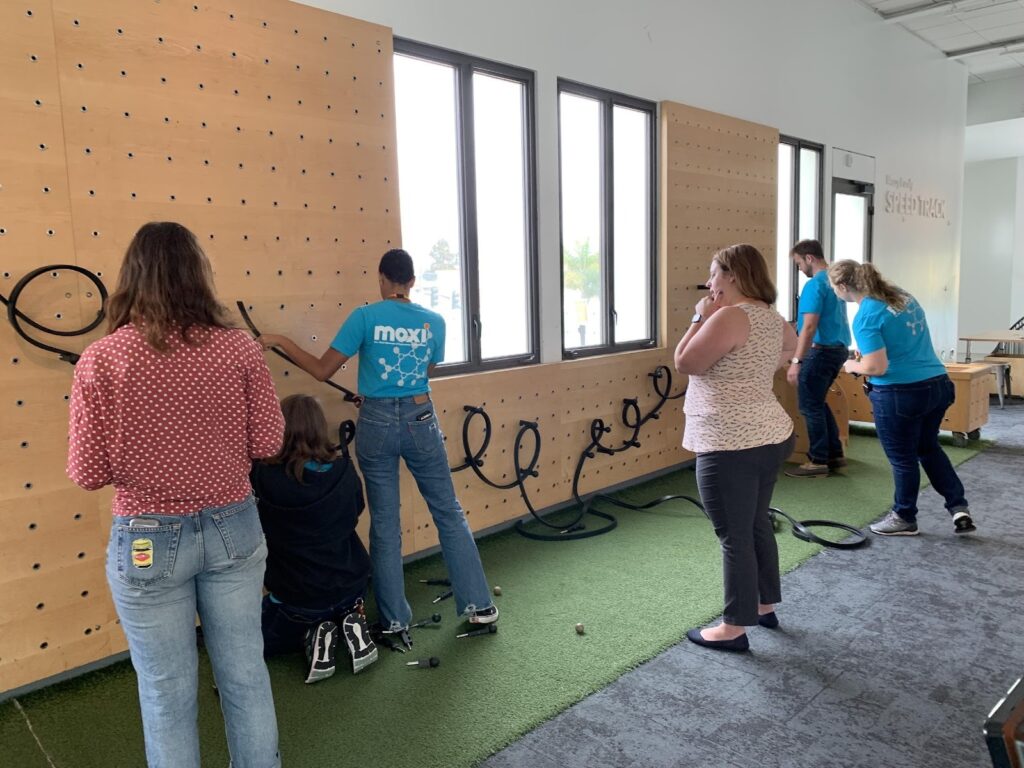
one insight or practice We Continue
One key insight MOXI has carried forward is around the intentional design of programs that allow for failure, rather than providing open-ended experiences where success is guaranteed simply by participating. We now try to focus on balancing goal-oriented objectives with flexibility, creating opportunities for visitors to take risks, reflect on outcomes, and develop persistence and problem-solving skills.
About us
Our Mission: To Ignite Learning Through Interactive Experiences in Science + Creativity.
As Santa Barbara’s hands-on destination for families and curious minds of all ages, MOXI is a place where you can explore and discover new things about the world around you, ask questions, seek answers and have a blast doing so. Learn more about our history, exhibits + programs, and plans for the future here.