Description: This assessment includes several sets of questions that can be used in its entirety or individual sets of questions. Questions are framed around (a) failure mindset, (b) problem solving strategies, and (c) emotional responses to failure
Created by: Science Museum of Minnesota & Alice Anderson
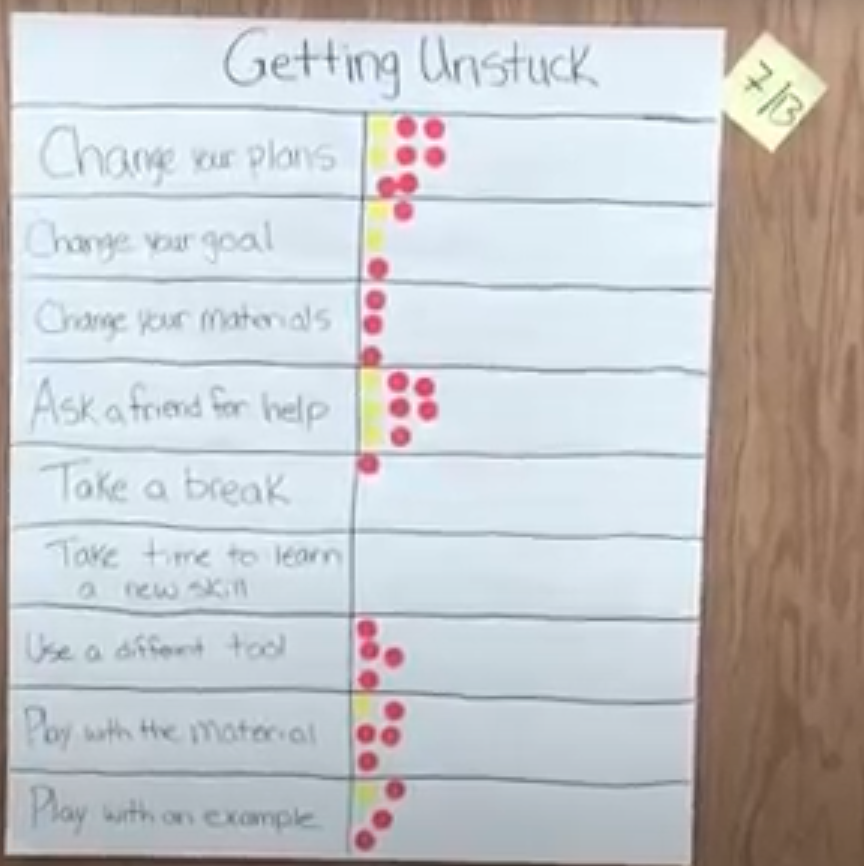
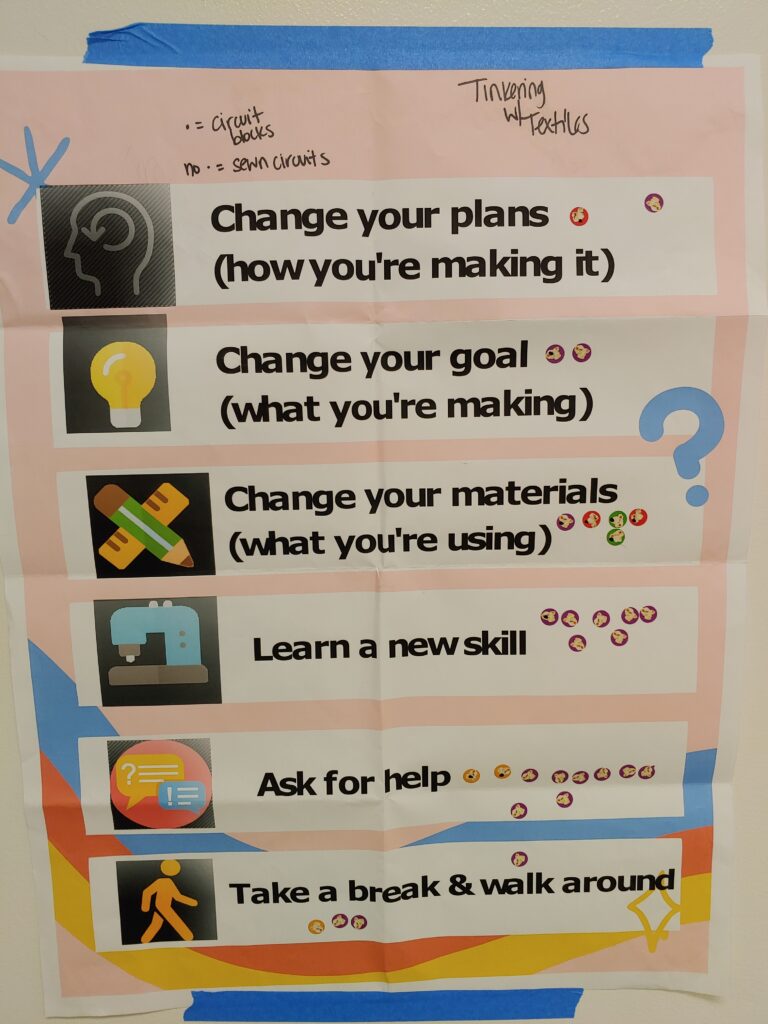
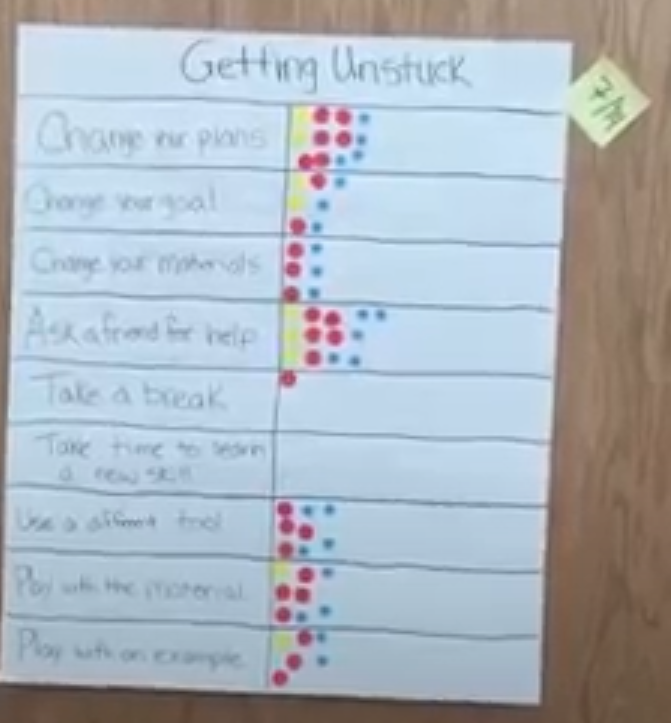
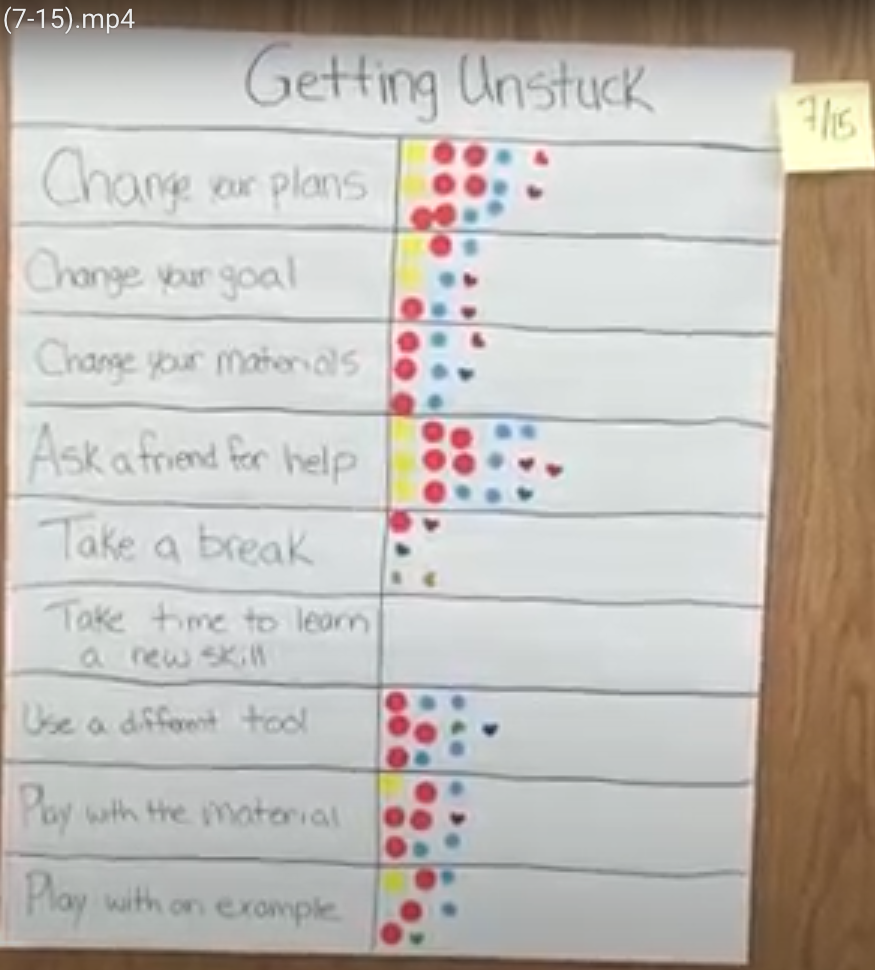
Description: Create a list of what to do when you are stuck. We suggest this be created by the youth and educators at the beginning of the making activity. This becomes a living document that can be added to throughout the activity, whether this be a drop-in session, a workshop, or a week-long camp. If a week-long camp, youth can add a dot at the end of the day to note which strategies were used. Use a different color dot each day. See images below.
Created by: Montshire Museum of Science & Scott Family Amazeum
The Unstuck Poster is a Talkback Board, an anonymous way to gather feedback. It displays a question, prompt, or list of options that visitors can respond to by posting a short reply or voting with a sticker. For more, check out this resource by the Connected Learning Lab: Talkback Board Repository
Description: There are things to keep in mind when collecting data from youth such as ethics and privacy. We have provided some guidance with this document, including sample assent and consent forms.
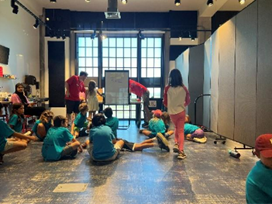
Description: A set of questions to pose at the end of a session regarding experiences with failure or have a place for youth to post responses. Examples include:
When did you struggle and how did you overcome it?
Was that a new strategy for you or was something you knew how to do already?
Who felt like they learned a new strategy today? Raise your hand.
What was a frustrating moment you had at camp?
When was a time things didn’t go the way you planned in a project?
Utilized by: The Tech Interactive, Scott Family Amazeum, & Montshire Science Museum
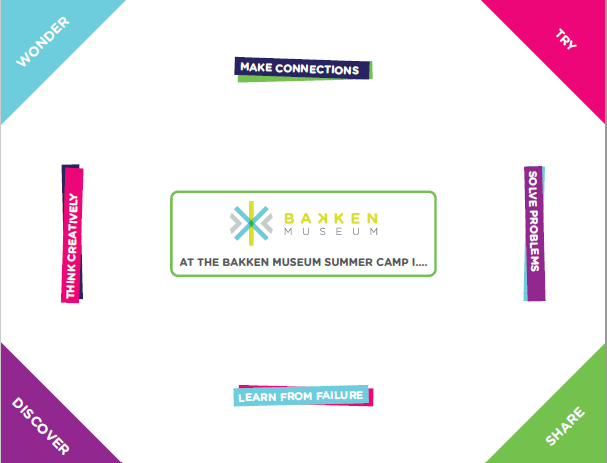
Description: Youth were asked to draw lines to words or phrases that they did during summer camp. These include: (a) make connections, (b) solve problems, (c) think creatively, (d) learn from failures, (e) discover, (f) share, (g) try, and (h) wonder. Youth were also asked to write a sentence or two about why they circled the items they circled.